.jpg?width=3872&height=2177&ext=.jpg)
Artificial intelligence is quietly reshaping how healthcare and insurance organizations interact with people, and one of the clearest examples of this shift is the rapid growth of AI-powered chatbots.
These assistants respond instantly, explain processes in simple language, and guide users through tasks that would otherwise require long waiting times or repeated calls to support teams.
A Statista report from 2025 noted that nearly 72% of users prefer digital self-service options when dealing with health or insurance questions, particularly because these topics often involve urgency or worry.
Meanwhile, McKinsey’s 2025 customer operations study showed that companies introducing automated support tools saw 20–35% cost reduction in service operations while improving response quality.
This growing preference is no accident. Users expect a level of digital convenience that aligns with how they live, work, and make decisions every day. Healthcare concerns rarely arrive at convenient hours, and insurance questions tend to appear at the exact moment people feel uncertain or overwhelmed. When platforms cannot respond quickly, users feel stuck. But when a chatbot steps in with clear guidance, the whole experience changes for the better.
Chatbots help people get answers without waiting for a human agent, and businesses get a system that reduces repeated tasks, speeds up internal workflows, and improves the overall customer experience. Many organizations begin exploring options with an AI chatbot development company once they realize how much time their teams spend answering the same simple questions.
This matters right now because customer expectations have shifted sharply toward quick, transparent, and friendly digital experiences across all industries, but especially in health and insurance where decisions have real consequences.
Why This Topic Deserves Attention Today?
Healthcare and insurance customers have become more digital in their habits and more demanding in their expectations. They want answers that feel understandable, they want guidance that does not require technical knowledge, and they want support that works whether it’s early morning or late at night. The challenge is that both industries deal with a massive number of questions—some simple, some complex—and support teams often struggle to manage the volume while maintaining quality and consistency.
This is where AI chatbots fit the moment. They offer instant responses that cover a broad range of repeatable tasks, freeing human agents to focus on cases where empathy, judgment, or personalized explanation is required. At a time when customer retention, operational efficiency, and transparency play a major role in how companies compete, a chatbot becomes far more than a convenience tool—it becomes part of the organization’s strategic foundation.
When someone is stressed about a medical appointment or confused about an insurance claim, waiting even 10 minutes for help can shape their perception of the entire brand. A chatbot eliminates that gap and gives them clarity immediately, which reduces frustration and builds confidence.
Key Takeaways
- AI chatbots simplify complex information, making it easier for users to move through health and insurance tasks with confidence.
- They reduce operational workload by handling a large portion of repetitive questions, which lowers service costs and improves staff efficiency.
- They make the customer experience more predictable and transparent, helping users trust the process instead of fearing confusion.
- When designed properly, they support business growth by improving conversions, reducing friction across user journeys, and identifying where customers struggle.
- Chatbots do not replace people; instead, they let staff focus on cases where human attention makes a real difference.
What an AI Chatbot Means for Health & Insurance
An AI chatbot in this space functions as an always-available assistant that communicates in everyday language. It understands what the user wants from the context of the message, which means it doesn’t require perfect grammar or formal phrasing to deliver helpful answers. While traditional chatbots rely on strict keyword matching and often produce rigid or unhelpful responses, AI chatbots interpret intent, even when the question is vague or emotionally charged.
This capability is especially important in healthcare and insurance, where users often have urgent or incomplete information. Someone may ask, “How do I check my policy coverage for surgery?” or “What do I do if my child needs a late appointment?” or “Why is my claim on hold?” These are not just yes-or-no questions. They require understanding, next steps, and sometimes a series of follow-up details.
A well-built chatbot guides the user through the situation in a calm, organized way, which reduces confusion and helps them accomplish tasks quickly. This shifts the user experience from stressful to manageable, which is one of the biggest benefits organizations notice after deployment.
Why Businesses Cannot Delay Adoption Anymore
From a business strategy standpoint, delaying chatbot adoption means accepting slower workflows, higher support costs, and a less consistent customer experience. Support teams in healthcare and insurance face high pressure, not because they lack skill, but because they handle complex systems that bring endless queries from users who feel anxious or confused. When teams must repeatedly answer the same questions—about claims, appointments, coverage rules, report timelines, policy renewals, or billing—fatigue builds and productivity drops.
AI chatbots absorb this repetitive load, giving human agents more time to focus on truly complex or emotionally sensitive cases. This shift improves service quality across the organization, and it also reduces operational stress.
Cost Efficiency
Businesses quickly realize the financial advantage. Supporting customers manually becomes expensive as volume grows, but automating routine interactions brings those costs down without sacrificing quality.
Better Service Experience
A chatbot ensures that explanations remain consistent, which is crucial for insurance policies or medical workflows that often confuse users. When information is clear and accessible, trust grows.
Scalability
As customer numbers increase, human-only support systems struggle. Chatbots scale effortlessly, managing thousands of conversations at once without needing additional staff.
Data-Driven Decision Making
Chatbots reveal common questions, confusing steps, and friction points across the user journey. These insights help teams fix issues at the root rather than react to complaints later.
How AI Chatbots Support Healthcare Websites & Apps
Healthcare requires clarity and compassion. People look for assistance during moments that range from simple appointment booking to complex medical uncertainty. AI chatbots help by smoothing the experience and offering guidance that makes the system easier to navigate.
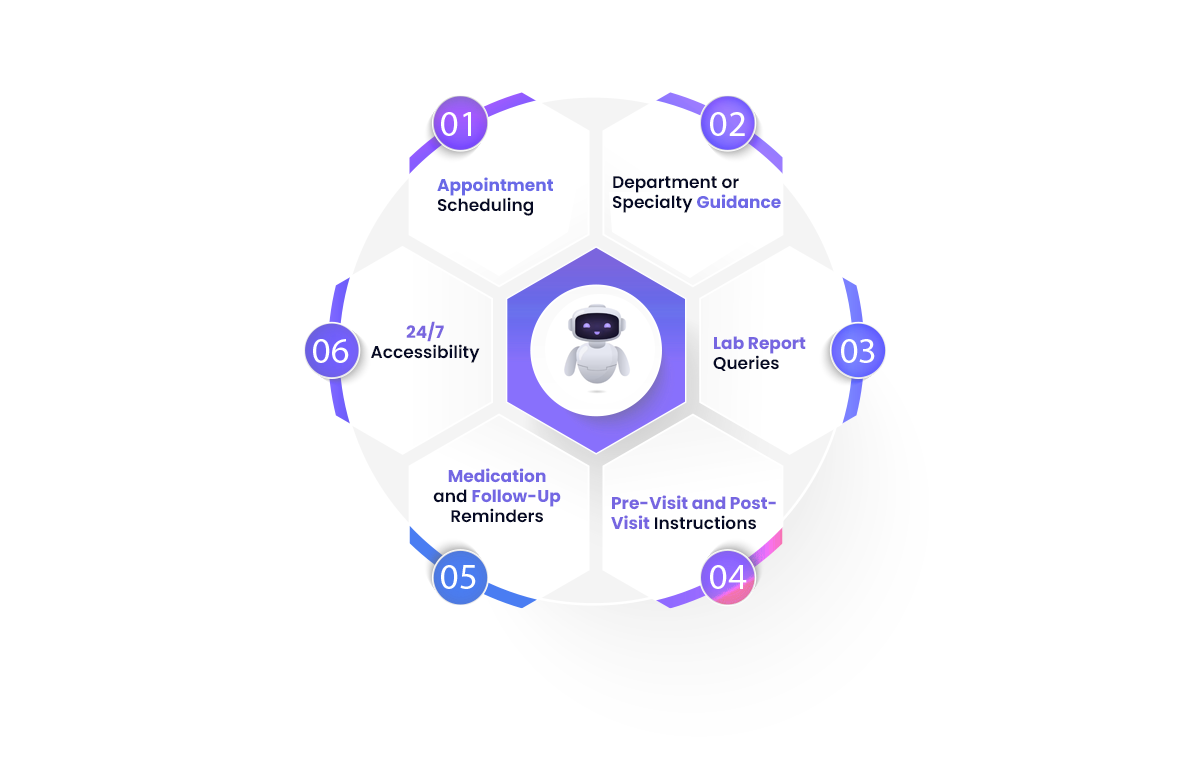
Appointment Scheduling
Users often struggle to find the right doctor or available slot. A chatbot can ask a few questions and quickly connect the user with available times, which reduces front-desk workload.
Department or Specialty Guidance
Many patients aren’t sure which doctor to consult for specific symptoms. The chatbot can ask for a brief description and recommend the appropriate department.
Lab Report Queries
Instead of calling repeatedly to check if reports are ready, users can simply ask the chatbot.
Pre-Visit and Post-Visit Instructions
Hospitals often provide instructions that patients forget or misunderstand. A chatbot can repeat these guidelines in simple language.
Medication and Follow-Up Reminders
For chronic conditions or ongoing treatments, simple reminders can make a meaningful difference in health outcomes.
24/7 Accessibility
Healthcare issues don’t wait for office hours. Users appreciate support whenever they need it.
How AI Chatbots Support Insurance Websites & Apps
Insurance customers typically interact with policies only during stressful moments—accidents, illnesses, renewals, and payments. This makes clarity even more important. AI chatbots help break down complicated insurance processes into manageable steps.
Policy Information
Users can ask what their policy includes, whether certain treatments or damages are covered, or how deductibles work. The chatbot responds with simple explanations that reduce confusion.
Claim Guidance
Filing a claim can feel overwhelming. A chatbot can walk users through requirements and documents, making the process smoother.
Claim Status
Instead of calling agents repeatedly, users get instant updates.
Renewal Assistance
Renewals often slip through the cracks. A chatbot can remind users well before the deadline.
Document Delivery
Users can request policy documents, digital ID cards, receipts, or proof of coverage instantly.
Lead Qualification
When visitors explore new plans, the chatbot can determine their needs and send qualified leads to the sales team.
Why Users Naturally Prefer Chatbots for These Topics
Most users want clarity more than anything else. They don’t want to be transferred between agents, wait in long queues, or struggle with terminology that feels complicated. Chatbots offer a calm and structured experience that adapts to the user’s pace. They do not rush, they do not judge, and they do not require users to phrase questions perfectly.
This sense of comfort becomes valuable during moments where health concerns or insurance decisions already create anxiety. When a chatbot responds immediately in a friendly tone, users feel supported rather than overwhelmed.
Core Features Every Chatbot Should Include
A high-performing chatbot in this domain should focus on clarity, security, and efficiency. Key features include:
- Strong natural language understanding
- Ability to manage multi-step tasks
- Secure access to user records where needed
- Claim and appointment assistance flows
- Smooth handoff to human agents
- Multilingual support
- Mobile-first design
- Analytics to track user behavior
These features ensure that the chatbot not only communicates well but also integrates smoothly into existing systems.
Why Chatbots Build Trust and Strengthen Relationships
Trust grows when users feel understood and supported. In health and insurance, trust is everything. A chatbot contributes to that trust by making information accessible, accurate, and easy to understand. People appreciate consistent explanations and the ability to get help without repeating themselves.
As users feel more confident navigating the system, they develop a stronger relationship with the platform or provider. This increases retention and satisfaction over time.
Where Chatbots Fit in Your Digital Business Strategy
A chatbot is more than a support tool. It becomes part of a digital strategy that strengthens the organization across departments.
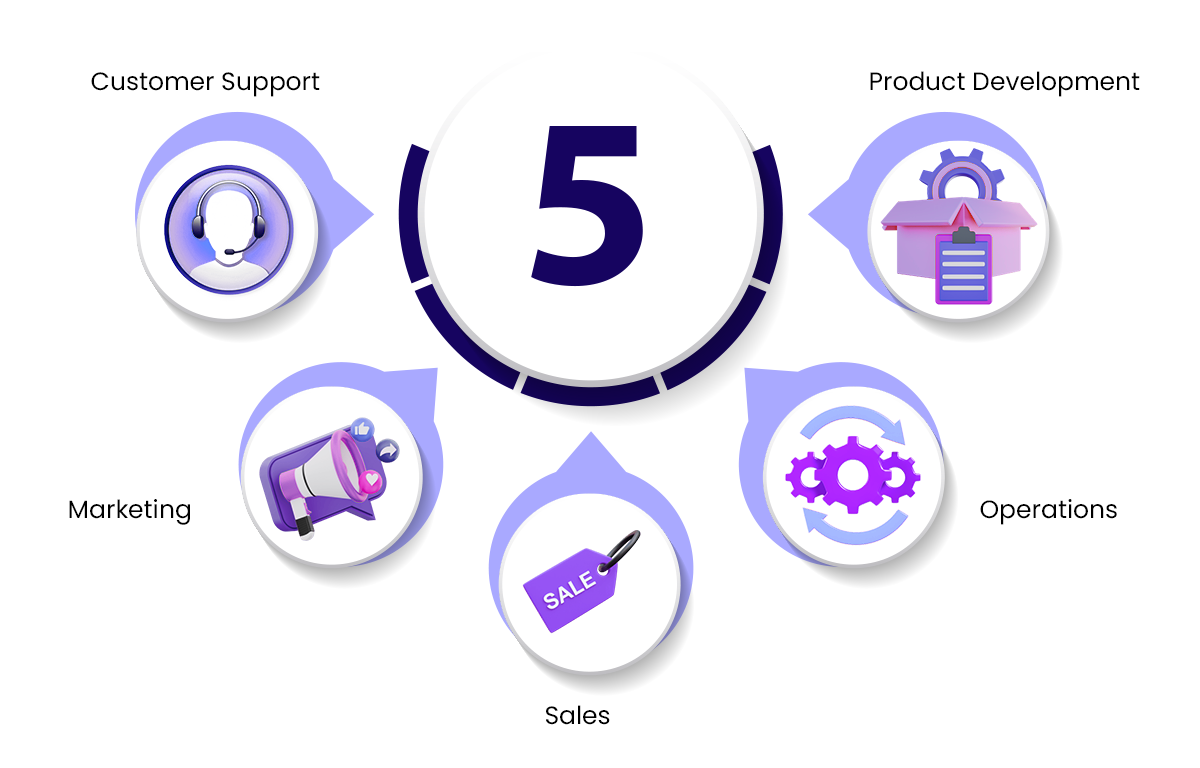
Customer Support
The chatbot becomes the first point of contact, handling routine questions quickly.
Marketing
It collects insights about user intent, interests, and preferences.
Sales
Insurance companies can route qualified leads to their teams faster.
Operations
By reducing manual tasks, teams work more efficiently and with less burnout.
Product Development
Chatbot conversations reveal areas where users get confused, which helps improve design and communication.
How Chatbots Improve Internal Teams’ Productivity
Chatbots offer advantages inside the organization too. Support teams get fewer repetitive queries, sales teams receive better-qualified leads, claims teams see fewer errors in submissions, and hospital staff benefit from smoother appointment flows. Management receives clearer data about performance and user patterns.
When repetitive tasks are automated, staff spend time on meaningful work, which improves morale and performance.
How AI Chatbots Work Behind the Scenes
Although the technology behind chatbots can appear complex, the basic flow is straightforward. The user sends a question, the chatbot interprets the intent, retrieves relevant data, and responds clearly. Over time, the chatbot improves by learning from recurring patterns and refining its answers.
This continuous improvement makes the system smarter with each interaction, leading to smoother user journeys and fewer errors.
A Practical, Business-Friendly Implementation Roadmap
Introducing a chatbot works best when organizations follow a structured plan. Start with clear use cases that represent the most frequent or high-impact user needs. Prepare relevant data such as FAQs, policies, and workflow rules. Test the system internally, launch it to a smaller group first, then expand once the performance feels reliable.
Analyze the questions users ask and gradually enhance the chatbot based on real behavior rather than assumptions.
Real Use Cases That Deliver Results Quickly
Healthcare
- Booking consultations
- Finding the right department
- Getting lab status updates
- Receiving medication reminders
- Asking about hospital services
Insurance
- Understanding coverage
- Filing claims
- Tracking claim progress
- Downloading documents
- Picking suitable plans
These use cases deliver improvements early and help teams build confidence in automation.
Mistakes to Avoid During Implementation
Common mistakes include designing overly complex flows, training the chatbot with insufficient or unclear data, ignoring the need for human handoff, neglecting user feedback, or automating tasks that require human judgment. Staying mindful of these issues ensures a smoother rollout.
The Long-Term Strategic Advantage of AI Chatbots
Over time, a well-designed AI chatbot becomes an essential part of a company’s growth strategy. It strengthens relationships by offering fast and friendly support, reduces stress for staff members, and helps leadership teams make smarter decisions based on real user data. It also improves digital engagement, making it easier for users to trust and rely on your platform.
A chatbot is not just a tool; it becomes a digital companion that supports users, employees, and the business as a whole.
Final Thoughts
AI chatbots play a vital role in modern healthcare and insurance platforms. They reduce friction in user journeys, simplify complex tasks, and bring clarity to processes that often overwhelm people. They give customers consistent help, and they give organizations the ability to scale support without creating operational strain.
When designed with care and implemented thoughtfully, a chatbot becomes an asset that strengthens user experience, enhances brand trust, and supports long-term digital growth.



.webp?lang=en-US&ext=.webp)

.webp?lang=en-US&ext=.webp)