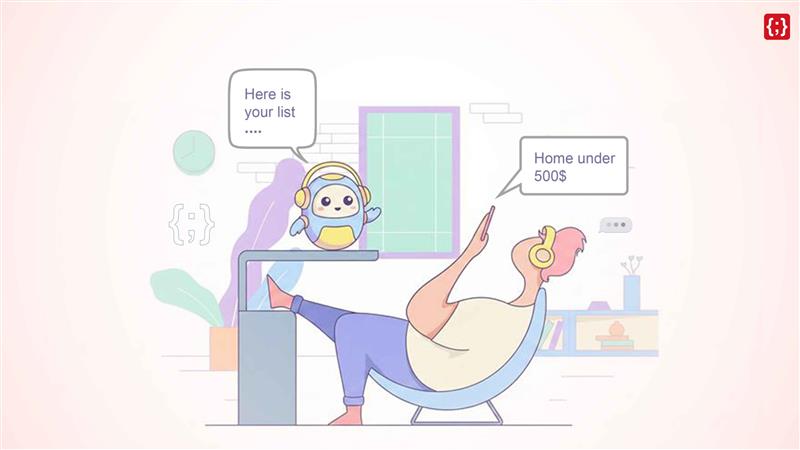
AI chatbots are quietly becoming the “always-on agent” on real estate websites and apps, guiding buyers and renters from first click to final decision.
Recent research shows that nearly half of recent US homebuyers begin by searching for property listings online, which means the digital experience is now the front door to your business, not your office.
The global market for chatbots was already worth around 7.8 billion dollars in 2024 and is projected to grow to well over 27 billion dollars by 2030, which shows how fast businesses are putting conversational tools into real-world customer journeys.
Forbes highlights that almost half of consumers actually prefer websites that include chatbots, and most people who use them report neutral to positive experiences rather than frustration. McKinsey research adds that digital chat is now widely accepted across age groups, even as customers still want the option to talk to a human when something really serious comes up.
Here is the twist though.
A Gartner survey, reported by Customer Experience Dive, found that self-service and live chat are expected to overtake traditional channels like phone and email as the most important customer service technologies, yet current self-service tools still fully solve only a small share of issues.
That gap is exactly where smarter, AI‑driven real estate chatbots can help, because they mix quick answers with context and escalation when needed. If you work with an experienced AI chatbot development company, you can bring this experience into your real estate website and app without turning your team into full-time software engineers.
This topic matters right now because property searchers expect instant, clear answers while they browse, and real estate teams cannot sit in front of live chat 24/7.
The point is, an AI chatbot on your site and app can guide, qualify, and support buyers and tenants while your agents focus on serious leads instead of chasing every basic question.
Key Takeaways:
- AI chatbots give real estate prospects instant answers on listings, pricing, eligibility, and visits right inside your website or app, without waiting for a call back.
- When designed well, they help both property searchers and your team: visitors get a smoother journey, and your agents spend their time on warm, ready-to-talk leads instead of repeated FAQs.
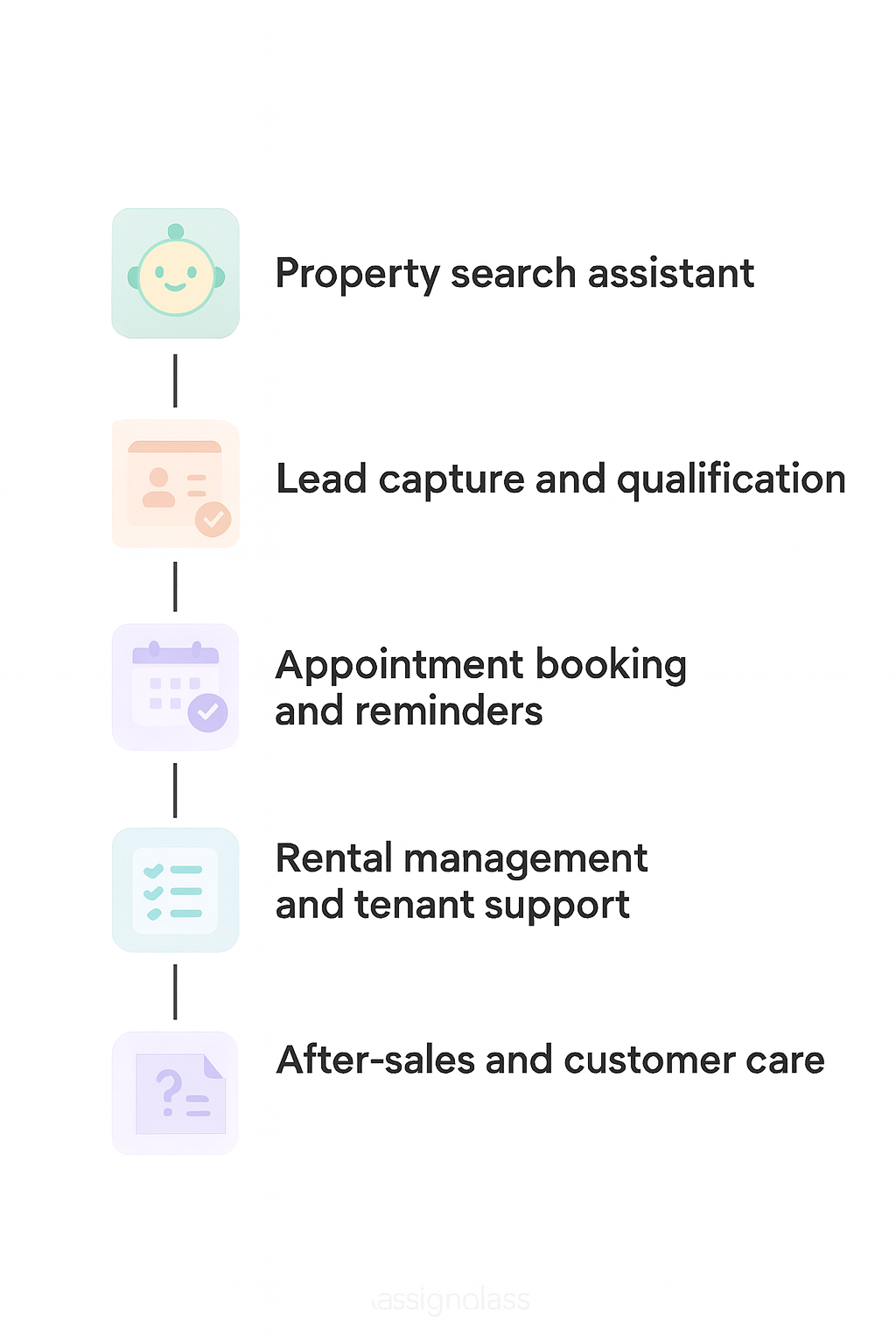
- The main use cases include property search assistance, lead qualification, appointment booking, rental and tenant support, and post-sales customer care.
- You can add a chatbot to your website with a small script or plugin, and to your mobile app using an SDK or webview, as long as you plan the flows, data, and handover to humans.
- Building your own bot means choosing between no-code tools and custom development, training it on your listings and policies, and connecting it to your CRM, calendars, and support tools.
- Zenesys Solutions Inc can work as your technical partner to design, build, integrate, and refine a real estate chatbot that fits your current tech stack and sales process instead of forcing you into a rigid template.
What is an AI chatbot for real estate?
A chatbot is software that holds text or voice conversations with people through a website, app, or messaging channel. Modern chatbots often use artificial intelligence and natural language processing to understand questions in everyday language and respond in a way that feels closer to talking to a human, instead of clicking through menus.

An AI chatbot for real estate is simply this idea applied to buying, selling, or renting property. It sits on your real estate website or app and talks about listings, budgets, areas, amenities, and next steps. It connects what the visitor says with your inventory, your rules, and your team’s schedule.
Think of it as a smart front-desk assistant that never sleeps.
It can say “Here are three 2BHK apartments under your budget in this area,” then help the visitor book a viewing or request a callback. It does not replace your agents. It warms up the conversation before they step in.
Why should a real estate business bother with an AI chatbot?
Because your website and app are already doing the job of “first contact,” and there is a huge drop-off when people cannot get quick, clear answers while they browse. Simply put, people come to your site or app with questions like:
- “Is this property still available?”
- “Can I afford this with my budget?”
- “Are pets allowed?”
- “Can I see it this weekend?”
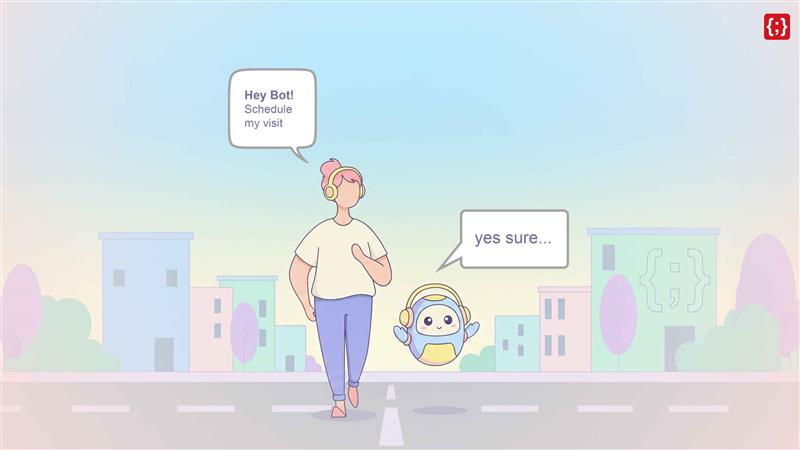
If they do not get answers in a few seconds, they leave — or they open a competitor’s tab. An AI chatbot gives them a friendly place to ask those questions, get instant responses, and then decide whether to share their details or book a visit.
Benefits for property searchers and tenants
For buyers and tenants, the main benefit is ease. They can ask anything at their own pace, at any time, without worrying about “disturbing” an agent or waiting for business hours.
The bot can:
- Help them narrow down listings based on budget, area, property type, and move-in date.
- Explain terms like carpet area, closing costs, deposit, or HOA fees in simple language.
- Share photos, key features, and location details inside the chat.
- Guide them to book a visit, schedule a video tour, or request a callback.
The experience feels closer to chatting with a helpful friend than fighting through a complex filter panel or long property pages.
Benefits for your real estate team
For your business, the biggest gain is focus. Your team cannot respond to every “Just looking” visitor in real time, but you also do not want to ignore them.
An AI chatbot helps by:
- Handling routine questions about availability, pricing, parking, pet policies, documents, and steps.
- Qualifying leads based on budget, timeline, property type, and financing readiness.
- Capturing contact details only when the visitor shows real intent.
- Routing hot leads to the right agent, office, or region with full context.
However, many teams install a basic chatbot widget and leave it untouched. The key is to tune it to your real estate data, markets, and sales process so it feels like part of your brand — not a generic bot.
Use cases across the buyer and client journey
The moment you see the full list of use cases, it becomes clear that real estate chatbots are not just fancy FAQ tools. They follow the buyer or tenant across the whole journey.
1. Property search assistant
This is usually the first and most visible use case. The chatbot asks simple questions in a natural flow:
- “What city or neighborhood are you looking at?”
- “What type of property do you prefer?”
- “What is your budget range?”
- “When do you plan to move?”
Based on these answers, it can show a shortlist of relevant listings with links to full pages, photos, and maps. The visitor feels guided instead of dumped into a huge search grid.
You can think of it as an interactive filter panel that talks to you. Instead of making visitors set dozens of filters, the bot has a short conversation and then does the heavy lifting.
2. Lead capture and qualification
Real estate leads are not equal. Some people are browsing; some are ready to sign. An AI chatbot can gently separate the two.
It can qualify leads by asking about:
- Time frame
- Financing readiness
- Decision-makers
- Must-have features
Then it can label the conversation for your CRM (cold, warm, hot) and pass the hotter ones straight to a human.
Why it hurts when you don’t do this: Agents waste hours calling people who just wanted to know if pets are allowed, while serious buyers are left waiting.
3. Appointment booking and reminders
Another strong use case is handling visits and meetings. The bot can:
- Show available slots for property tours based on your team’s calendar.
- Let visitors pick a time that works for them.
- Send reminders, directions, and a quick checklist of documents or questions to prepare.
This reduces back-and-forth emails and missed calls. It also creates a smoother experience for property searchers who prefer to do everything inside your site or app.
Let an AI Chatbot Handle Your Property Bookings
Give visitors a smooth way to pick a tour slot, get instant reminders, and receive directions—handled automatically by an AI chatbot. Zenesys builds smart real-estate chatbots that manage appointments without the endless back-and-forth.
4. Rental management and tenant support
For property managers and rental businesses, chatbots can also support existing tenants—not just new prospects.
Common flows include:
- Reporting maintenance issues with photos and descriptions.
- Checking rent due dates and payment status.
- Getting building rules, visitor policies, or parking details.
- Sharing move-in and move-out checklists.
Here, the chatbot becomes a shared front desk for many properties. Tenants don’t need to remember phone numbers or emails; they simply open the app or website and ask.
5. After-sales and customer care
Buying a property is not the end of the relationship. New owners still have questions about documents, warranties, association rules, or future projects.
An AI chatbot can help by:
- Answering questions about paperwork, timelines, and next steps.
- Sharing links to important documents and guides.
- Routing complex issues to the right team member with full conversation history.
This kind of steady support builds trust and gives your brand a reputation for being present, even after the deal is done.
How to get your real estate chatbot live
This is where the “how to” part kicks in. Let’s break it into three angles: website, app, and build options.
How to implement an AI chatbot into a website
Adding a chatbot to a real estate website is usually not as hard as it sounds. The main work is in planning the flows, not in pasting the code. A simple path looks like this:
Define the jobs the chatbot must do
- List the top 20 questions your agents answer every week.
- Add the steps you want automated: basic search help, visits, lead capture, tenant requests, etc.
Choose your platform or tech
- You can use a no-code chatbot platform, a cloud AI service, or a custom-built solution.
- Ensure it supports your languages, channels (web, mobile, WhatsApp, etc.), and integrates with your CRM and mail tools.
Connect to your data
- Feed the chatbot with your listings, areas, amenities, rules, pricing ranges, and policies.
- Keep the data updated — if a property is sold or rented, the bot should know immediately.
Integrate it into the site
- Add a script snippet or plugin to your website, then customize the chat widget (colors, greeting text, logo).
- Use smart triggers: show the bot when someone scrolls property pages, checks pricing, or gets stuck on a form.
Design clear handover to humans
- The bot should not pretend to do everything.
- Let visitors easily choose “Talk to an agent,” and pass the chat with context to a human through CRM, email, or helpdesk.
Test with real users and refine
- Review chat transcripts to see where users drop off.
- Update flows weekly at first — over time, the bot improves and handles more questions smoothly.
How to implement an AI chatbot into an app
For mobile apps, the logic is similar, but the technical implementation varies.
In most cases, you will:
- Use an SDK from your chatbot provider to embed chat inside your iOS and Android apps.
- Or load the same web chatbot using a webview that matches your app’s UI.
When integrating into an app, also consider:
- Push notifications for alerts, reminders, and follow-ups (e.g., “Your visit tomorrow at 5 PM is confirmed”).
- Device features like location sharing for nearby properties or photo uploads for maintenance issues.
- Offline behavior so users don’t lose chats if the network drops.
The goal is to make the chatbot feel like a seamless part of the app, not an external popup layered on top.
How you can build own an AI chatbot for real estate
Now the bigger question: build vs buy. How can you actually create this chatbot? You have three broad options:
1. No-code or low-code tools
- Good for speed and basic use cases.
- You drag and drop flows, connect to your data via APIs or CSV uploads, and go live quickly.
2. Cloud AI building blocks
- Here you use cloud platforms that provide natural language understanding, intent detection, and generative answers.
- Your development team or partner wires these services into your site, app, and backend systems.
3. Custom-built solution with a tech partner
- Best when you need deep integration with your CRM, booking system, property management software, or custom workflows.
- A partner like Zenesys helps with architecture, data privacy, training, and monitoring, so your in-house team is not overloaded.
Whatever route you pick, the steps are similar:
- Collect real questions from emails, chats, and calls.
- Group them into topics and design clear, simple flows with fallbacks.
- Train the AI with examples from your inventory, terms, and language style.
- Connect it to systems like CRM, calendars, and ticketing so it can actually take actions, not just reply.
- Monitor and improve by checking what the bot could not answer and teaching it better responses over time.
Building a useful chatbot is less about fancy tech and more about knowing your buyers, tenants, and agents very well.
Can AI-powered chatbots really support customers – and how Zenesys can help?
Can AI chatbots really help customers on real estate websites and apps?
A fair question at this point is: can AI chatbots really assist customers by answering questions and solving issues on real estate websites and apps?
The honest answer is yes, but only when they are designed with clear limits and good handover. They are excellent at routine questions, structured tasks (like booking or qualifying), and basic explanations, as long as the data behind them is accurate and current. They are not good at emotional conversations, complex negotiations, or rare edge cases where even humans need to ask a colleague.
The point is, the best real estate experiences mix both. Let the chatbot handle the repeatable work and capture context. Then let humans step in for high-stakes discussions like final prices, special conditions, or complex documentation.
How Zenesys Solutions Inc can help you
If this feels like a lot to juggle, that is exactly where a focused tech partner becomes useful. Zenesys Solutions Inc can help you move from “We should have a chatbot” to “Our website and app now have a helpful assistant that actually supports our goals.”

In practical terms, that usually includes:
Strategy and use-case design
- Clarifying what you want the chatbot to do for property searchers, tenants, and agents.
- Identifying metrics that matter: qualified leads, visit bookings, support load, etc.
Conversation and UX design
- Writing flows in clear, human language.
- Deciding when to ask for contact details.
- Balancing free text and guided options.
Technical implementation
- Selecting the right tech stack or chatbot platform.
- Connecting it to your website CMS, mobile apps, CRM, property management systems, and communication tools.
Testing, training, and tuning
- Running pilots and reviewing transcripts.
- Adjusting answers, flows, and triggers based on real user behavior.
Ongoing support and improvement
- Updating the bot as your inventory, areas, and policies change.
- Evolving with new AI improvements and business needs.
This way, you are not just installing another widget. You are building a clear, helpful experience for property searchers and clients that fits the way your real estate business already works—and that keeps improving as your data and your team grow.
If you want, the next step is simple: decide what one or two use cases would help your buyers and renters the most right now, then design a small, focused chatbot around them. Once that works, you can add more.



.webp?lang=en-US&ext=.webp)

.webp?lang=en-US&ext=.webp)