.jpg?lang=en-US&ext=.jpg)
Travel and hospitality companies sit in one of the busiest customer service environments in the world. People search, compare, book, cancel, rebook, and ask for details at all hours. They expect quick replies, and they don’t care what time zone you’re in. They simply want help the moment a question comes to mind.
That expectation is stronger than ever in 2025. Reports from Statista, Forbes, McKinsey, and Gartner all show the same pattern: Online travel activity keeps rising, travelers keep demanding faster responses, and businesses keep feeling the pressure.
More bookings happen on mobile.
More customers depend on digital assistance.
And more companies now rely on AI chatbots to handle the constant flow of questions that never really stop.
The challenge is pretty straightforward. Your staff cannot answer every inquiry instantly, but your customers still expect instant replies. Support teams get overwhelmed. Response times slip. Bookings are lost. People move to competitors who simply respond faster.
This is why AI chatbots are no longer just “nice to have.” They play a direct role in giving customers the clarity they need at the exact moment they need it. A well-designed chatbot answers questions, shares availability, explains policies, guides decisions, and handles a large portion of routine conversations without involving your support team at all.
Chatbots don’t replace people — they make the customer experience smoother and more reliable.
They step in where human response times can’t keep up and support your team when workloads pile up. An AI chatbot development company will often describe this as “shared responsibility,” but in simple terms, it's just smart customer service.
This guide goes deep into every part of the topic — why these chatbots matter, how they improve customer experience, what benefits they offer, where they are used, and what it takes to build and implement them across websites and mobile apps.
Why AI Chatbots Matter in Travel and Hospitality Today
People travel differently now. They plan trips late at night. They browse hotel options between meetings. They compare flight prices during lunch. And the moment they’re unsure about something — even something small — they expect an answer that won’t make them wait.
Travel businesses, however, face a real limitation: support teams can only cover so many hours and so many questions. The demand is constant. The questions repeat. And the volume climbs during peak seasons or holiday periods. When support teams fall behind, customer satisfaction falls with them.
AI chatbots solve this gap by being available the entire time your customers are online. They don’t take breaks. They don’t need shift rotation. They never close for the day. They deliver straightforward answers the moment a question appears, which dramatically reduces the drop-off rate that often happens when customers feel stuck or confused.
Another reason they matter is consistency. Human agents vary in tone and speed, especially during busy hours. Chatbots deliver the same clarity every single time. No rushed replies. No missing details. No delayed responses because six other people are also waiting.
You’re essentially giving your customers a reliable, always-ready guide who responds with calm accuracy, even when your actual team is handling more complex issues in the background.
Build a Smart AI Chatbot for Your Travel & Hospitality Business
Give your customers faster responses, smoother booking journeys, and 24/7 automated support with Zenesys’ AI-powered chatbot solutions.
Why Zenesys?
- Custom AI chatbots aligned with your booking flow
- Deep integration with PMS, CRM & booking engines
- Multilingual chatbot for global travelers
- Smart upsell & cross-sell recommendations
- Seamless human handoff for complex issues
- Scalable, secure & easy to maintain
How AI Chatbots Improve Customer Experience
Great customer experience in travel comes down to one simple idea: make the journey easier, not harder. An AI chatbot helps your website or app do exactly that by bridging the gap between customer expectations and operational limitations. Here’s a detailed breakdown of how it improves the experience at every stage.
1. Instant Answers Without Making People Wait
Customers hate waiting for replies — especially during trip planning. A delayed response gives them enough time to abandon the booking and explore alternatives. Many don’t come back. A chatbot solves this instantly. It answers common questions in seconds, no matter what time the visitor arrives. Whether someone asks about check-in times, cancellation rules, luggage guidelines, or airport pickup, they get immediate clarity. And that speed alone increases trust because it shows the business respects their time. Customers stay longer when they feel supported right away.
2. Faster and More Confident Decision-Making
Travel decisions often involve hesitation. People compare flights, rooms, packages, and amenities. They check prices. Then they repeat the loop. It’s easy to get overwhelmed and drop the idea entirely. A chatbot reduces that confusion by guiding customers step-by-step. It asks simple questions about dates, budgets, preferences, group size, or destination needs. With that information, it suggests relevant options instead of forcing users to search endlessly through menus. This reduces decision fatigue and speeds up the path to booking. Most importantly, the customer feels confident that they chose the right option.
3. Personalization That Feels Natural, Not Forced
Customers appreciate when a business remembers their choices. But they dislike overly aggressive or robotic personalization. A well-designed AI chatbot finds the balance. It uses past behavior, previous bookings, or stated preferences to provide suggestions that make sense. If someone prefers city-view rooms, the chatbot highlights those options first. If they often travel with family, it doesn’t show single-occupancy rooms. If they've booked spa packages in the past, it might offer a gentle reminder of available offers. This type of personalization feels more like helpful guidance rather than marketing pressure.
4. Reduces Stress and Pressure on Support Teams
Support teams often spend most of their time answering the same repetitive questions. These questions are important, but they don’t require human expertise. This repetitive load creates burnout, slow responses, and errors during peak traffic. A chatbot offloads most of these repetitive tasks. It manages the routine inquiries and directs only the complicated or sensitive issues to human agents. This makes your support operations healthier, faster, and more efficient. Your team gets more time to focus on real customers with real problems — the conversations where emotions or complexity require a human touch.
5. Helps You Serve a Global Audience With Multilingual Support
Travel is international by nature. Customers come from different countries and speak different languages. A multilingual chatbot breaks that barrier by communicating in the language the traveler feels most comfortable with. This makes your experience welcoming. It also helps avoid misunderstandings that could affect booking decisions. A simple, friendly conversation in a familiar language can dramatically increase your conversion rates, especially for first-time travelers. In hospitality, a modern hotel TV system goes beyond entertainment, offering in-room services and information in multiple languages to make guests feel at home.
6. Creates a More Consistent, Predictable Customer Journey
Every customer expects the same level of clarity. They want the correct information. They want the same process. They want the same rules applied to everyone. Humans naturally vary in how they respond — especially when they are tired or overloaded. But a chatbot keeps the experience steady. It shares verified information pulled directly from your systems. It follows the same instructions every time. And it doesn’t skip important details. Consistency builds trust. When customers know what to expect, they feel safe booking with you.
Benefits of AI Chatbots for Travel & Hospitality
Let’s go deeper into the practical advantages.
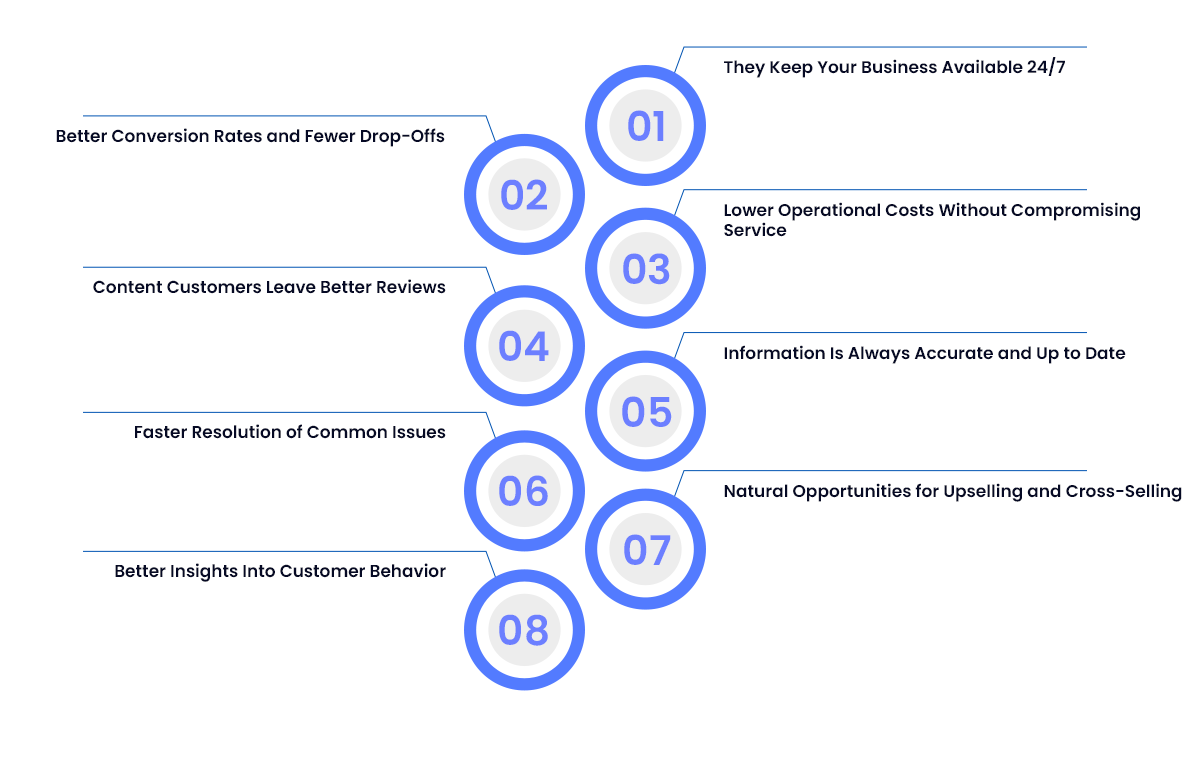
1. They Keep Your Business Available 24/7
Your front desk may close, and your support staff may log out, but customer questions don’t stop. A chatbot acts as your continuous support layer. Whether it's early morning or the middle of the night, customers can still get answers. This alone reduces booking loss because people don’t feel abandoned.
2. Better Conversion Rates and Fewer Drop-Offs
Travel decisions depend on clarity. When customers don’t get answers, they leave. When they get answers instantly, they move forward. A chatbot guides them at the right moment, especially in situations like:
- confusion about availability
- uncertainty about policies
- questions about pricing
- doubts about room features
Removing small roadblocks results in more completed bookings.
3. Lower Operational Costs Without Compromising Service
Hiring and training support teams is expensive. Expanding teams for peak seasons is even more costly. AI chatbots reduce this burden by handling a large portion of everyday questions. They don’t eliminate your team — they make your operations more efficient. You spend less on training, fewer hours on repetitive inquiries, and more energy on meaningful customer interactions.
4. Content Customers Leave Better Reviews
A smooth booking process often leads to happier guests. When people get fast answers, their stress drops. They feel respected, informed, and ready to move forward. Positive experiences create positive reviews, and review platforms heavily influence the travel and hospitality industry. A chatbot indirectly supports your reputation by reducing frustration during early interactions.
5. Information Is Always Accurate and Up to Date
Humans can give inconsistent answers during busy shifts or when juggling multiple customers. Chatbots provide answers based on real-time data. They don’t guess or improvise. Whether it’s room availability, pricing, check-in times, or cancellation rules, accuracy stays consistent. This reduces misunderstandings and prevents the type of conflicts that often lead to complaints.
6. Faster Resolution of Common Issues
A large portion of customer questions fall into predictable categories. A chatbot resolves these instantly, which makes the entire experience feel smoother. Customers don’t wait hours just to confirm a basic detail. They get the information and move ahead with their plans.
7. Natural Opportunities for Upselling and Cross-Selling
Upselling in travel works best when the suggestion feels relevant and well-timed. A chatbot understands context. It can suggest add-ons that genuinely match the customer's needs. For example:
- “Would you like early check-in for your arrival?”
- “Would you prefer a room with a balcony?”
- “Do you want to add breakfast for your stay?”
These gentle suggestions increase revenue without feeling pushy.
8. Better Insights Into Customer Behavior
Every chatbot conversation becomes a piece of data. Over time, you see patterns:
- What customers ask most
- Where they get stuck
- What information they can’t find
- What offers attract attention
- What concerns cause hesitation
These insights help you improve your website, refine your offers, and adjust your support approach.
Use Cases, Website Implementation, App Integration & Real Effectiveness
AI chatbots have become a core part of how travel and hospitality brands interact with customers. They’re not just answering questions — they’re guiding decisions, supporting transactions, reducing confusion, and holding the customer’s hand through every step of the journey. To understand how they truly fit into the real world, it helps to look at the most common and impactful use cases. Below is a deeper explanation of what chatbots actually do inside travel apps and websites, and why these use cases matter for both your customers and your internal teams.
Detailed Use Cases of AI Chatbots in Travel & Hospitality
These use cases come from real patterns across hotel chains, travel agencies, OTA platforms, airlines, and modern booking apps. The key thing to notice is how each use case removes friction from the customer experience.
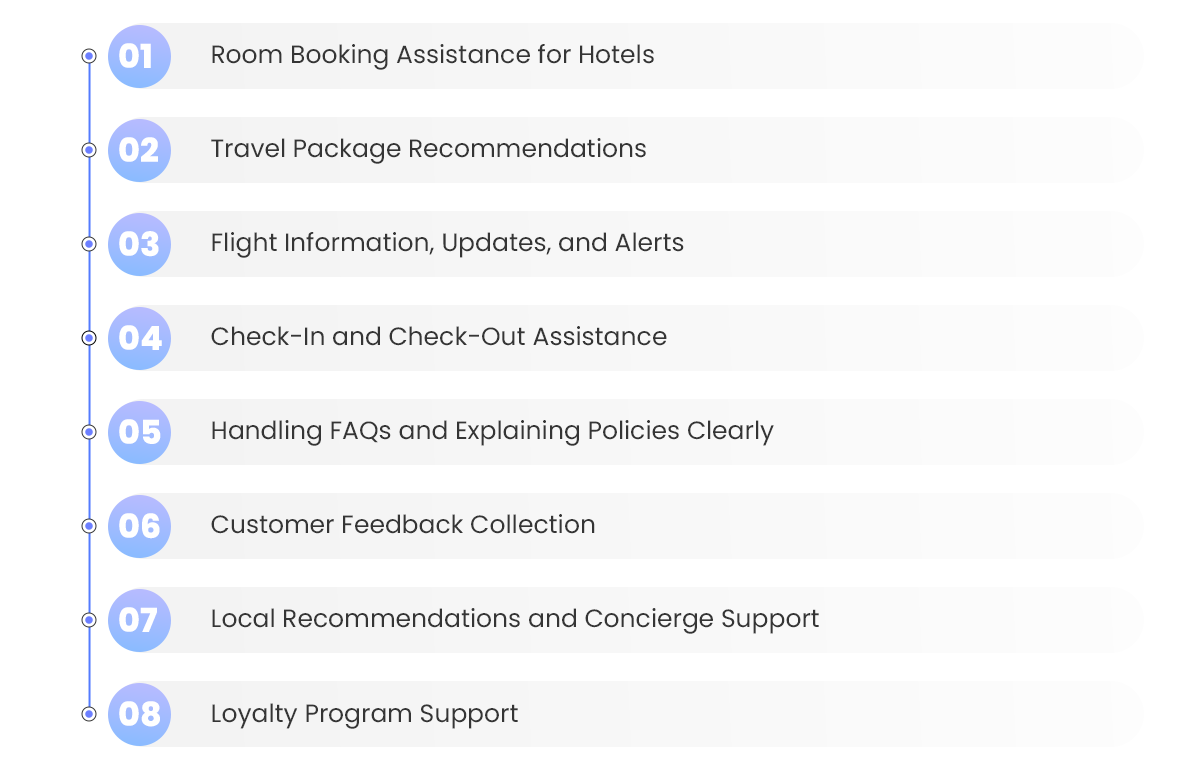
1. Room Booking Assistance for Hotels
Hotel bookings often involve several questions that customers want answered immediately. They want to know about prices, availability, room features, add-ons, and policies before they finalize their choice. A chatbot becomes the “digital concierge” who walks them through these questions one at a time. Instead of navigating multiple pages, the customer can simply ask the chatbot:
- What room types are available on certain dates?
- What’s the difference between a deluxe room and a suite?
- Are early check-ins allowed?
- Do you have pet-friendly rooms?
- Is breakfast included?
The chatbot responds with structured, accurate information. It may even show images or compare options side-by-side. This turns a complex decision into a simple conversation, which helps customers reach a final booking faster. Many hotels also integrate the chatbot with their booking engine, so the assistant can check real-time availability and provide live confirmations. For people who prefer a more guided process, this is easier than moving between menus or booking forms.
2. Travel Package Recommendations
One of the biggest challenges in travel planning is decision overload. Customers browse through dozens of packages and still feel unsure. A chatbot helps reduce this overwhelm by asking a few simple questions:
- Where would you like to travel?
- What’s your preferred travel date?
- Are you traveling alone or in a group?
- What’s your budget range?
- Do you prefer adventure, relaxation, or sightseeing?
With this information, the chatbot filters down the best options. This creates a curated experience without forcing the customer to scroll endlessly. The process feels personal, but not intrusive. It also helps travel companies highlight specific packages or offers at the right moment.
3. Flight Information, Updates, and Alerts
Flight-related inquiries often spike during weather changes, operational delays, or schedule disruptions. Customers want immediate clarity on:
- Gate changes
- Flight delays
- Rescheduled flights
- Boarding instructions
- Baggage rules
- Refund eligibility
A chatbot can retrieve and present live data without the customer needing to search through emails or open the airline’s website. This reduces confusion and keeps travelers informed in real time. Many airlines also use chatbots to send proactive alerts through apps, SMS, or WhatsApp. Instead of waiting at the airport counter or calling support, customers get the information they need instantly.
4. Check-In and Check-Out Assistance
Hotel check-in processes often require paperwork, identity confirmation, or clarifying policies. A chatbot helps pre-fill information, share instructions, and prepare guests before they arrive. This speeds up the front-desk workflow and reduces lobby wait times. For check-out, a chatbot can: Share the bill Explain charges Confirm late check-out options Arrange transport Collect feedback This simplifies the end of the guest journey and leaves a positive last impression.
5. Handling FAQs and Explaining Policies Clearly
Policies can frustrate customers when they’re hard to find or too long to read. Chatbots simplify these topics by turning them into short, direct answers. Common topics include:
- Cancellation rules
- Refund timelines
- Security deposits
- Smoking rules
- Parking availability
- Extra charges
- Visa support
- Child stay policies
A chatbot avoids long paragraphs and gives answers that feel digestible. This clarity helps reduce disputes later.
6. Customer Feedback Collection
Feedback is essential in the travel industry. The problem is that customers rarely fill long forms. A chatbot solves this by having a short, conversational feedback loop: “How was your stay?” “Would you rate your experience out of 5?” “Anything we can improve?” People respond to conversations more often than forms. This gives you richer insights into customer satisfaction without pushing too hard.
7. Local Recommendations and Concierge Support
Guests often ask about restaurants, attractions, transport options, or local experiences. A chatbot acts like a digital concierge by recommending the best places based on customer interests. This is especially useful for international tourists who may not know the area well. The chatbot can offer maps, directions, opening times, entry fees, and safety notes — all inside a friendly chat window.
8. Loyalty Program Support
Travel loyalty programs tend to confuse customers. Points, tiers, redemption steps, and special offers all require explanation. A chatbot simplifies this by letting users ask direct questions:
- “How many points do I have?”
- “How can I redeem them?”
- “What rewards am I eligible for?”
- “How do I reach the next tier?”
This keeps customers engaged with your program, which encourages repeat bookings.
How to Implement an AI Chatbot Into a Travel Website
Adding a chatbot to your website isn’t just about placing a widget in the corner. It’s about creating a smooth experience that actually fits into how your customers interact with your platform. Implementation requires planning, clarity, and strong integration. Here’s a detailed, step-by-step breakdown of how businesses usually approach it.
Step 1: Identify High-Volume Questions and Customer Intent
Start by gathering real data. Look at your email inquiries, live chats, call logs, and online reviews. Identify the most common questions. These usually fall into:
- availability
- pricing
- policies
- booking changes
- amenities
- transport options
- location details
Your chatbot’s first job is to answer the things customers repeatedly ask. This creates immediate value.
Step 2: Choose a Platform That Matches Your Technical Capacity
Different businesses have different needs. Some want basic automation. Others want a fully intelligent assistant that understands natural language and integrates with booking engines. When selecting a platform, consider:
- How complex your customer queries are
- Whether you need multilingual support
- Integration with CRM, PMS, and booking systems
- Your team’s ability to maintain the chatbot
- Security and data privacy requirements
A simple setup may work for a small hotel. A large travel agency might need deeper intelligence and customization.
Step 3: Integrate the Chatbot With Core Systems
A chatbot is only as useful as the data it can access. It should be connected to:
- room availability systems
- flight schedules
- booking engines
- CRM databases
- user accounts
- payment gateways
- policy documents
This ensures the chatbot provides accurate, real-time answers. Without system integration, it simply becomes another FAQ tool, and customers quickly lose trust in it.
Step 4: Train the Chatbot With Real Conversations
AI works best when trained with real examples. Load the chatbot with sample conversations from your actual support history. This helps the AI understand the tone, phrasing, and common patterns that customers use. Training also helps prevent misunderstandings that could confuse customers. The more scenarios the chatbot sees, the better it gets at recognizing user intent.
Step 5: Add the Chatbot Widget to Your Website in a Visible Location
Placement matters. If customers can’t find the chatbot easily, they won’t use it. Most companies place it at the bottom-right corner because that’s where users naturally look for support. Some also add it to key pages like:
- booking pages
- pricing pages
- package pages
- help center
- mobile view headers
The goal is to make the chatbot feel like a natural part of the browsing experience.
Step 6: Run Internal and Customer Testing Before Launch
Before making the chatbot public, test it with: your support team selected customers different languages different booking scenarios edge cases This helps catch mistakes early. A few days of testing can prevent months of customer complaints later.
Step 7: Launch, Monitor, and Keep Improving
A chatbot is not a “set it and forget it” system. Customer behavior changes. Policies change. Your offerings change. Regular updates ensure the chatbot remains useful. Monthly reviews help you refine flows, adjust responses, and add new capabilities based on customer feedback.
How to Implement an AI Chatbot Into a Mobile App
Mobile users behave differently from website users. They expect faster performance, cleaner layouts, and simplified interactions. Here’s how implementation works for apps.
1. Use an In-App Chat Experience That Feels Native
App users shouldn’t feel like they’re being redirected to a browser. The chatbot needs to appear as part of the app itself. A clean, modern inline chat UI creates a smooth experience. Most apps place the chatbot:
- in the main menu
- on the home dashboard
- in the booking flow
- or through a floating icon
The key is to make it easy to access without interrupting what the user is already doing.
2. Integrate the Bot With App Modules and User Profiles
A chatbot inside an app should have the ability to interact with:
- booking history
- saved payments
- loyalty points
- user preferences
- notifications
- live trip details
This is more powerful than a website chatbot because mobile apps naturally hold deeper personal data. The chatbot can personalize suggestions better and answer questions faster.
3. Use Push Notifications for Follow-Up
Push notifications allow the chatbot to re-engage users who left the app mid-task. Examples include: reminders to complete a booking updates about flight delays hotel check-in instructions time-sensitive promotions These gentle nudges increase conversions and keep customers informed.
4. Offer Optional Voice Support
Many mobile users prefer speaking over typing, especially when they’re on the move. Voice-enabled chatbots make the experience smoother for people who want quick replies without manual typing. This is especially valuable in travel scenarios like airports, taxis, or public spaces where typing may not be convenient.
5. Keep It Lightweight to Avoid Slowing Down the App
A chatbot should not make your app heavy or slow. It must load quickly and respond without lag. Performance matters more in apps because users uninstall apps that feel sluggish. Choosing efficient backend services and proper caching ensures the chatbot feels fast and reliable.
Can AI Chatbots Really Assist Customers by Answering Questions and Solving Issues?
The honest answer is yes — but only when designed with realistic expectations. AI chatbots are extremely effective at handling structured, repetitive, and predictable tasks. They shine when the questions are clear and the expected answers are straightforward. Here’s what chatbots handle very well:
- FAQs
- booking status
- comparisons
- basic modifications
- information lookup
- reminders
- automated follow-ups
- policy explanations
- recommendations based on filters
These tasks make up a large percentage of customer interactions in travel. When chatbots take over this portion, support teams can focus on serious matters. However, the problem is that some businesses expect chatbots to solve everything, including human-sensitive issues like:
- emotional complaints
- escalations
- refund disputes
- special approvals
- emergency travel changes
These situations still require a human. The best system is a hybrid one: AI handles routine help, humans handle exceptions. This model keeps interactions smooth, protects the customer experience, and prevents frustration from both sides.
How to Build an AI Chatbot for Travel & Hospitality (Detailed Guide)
Building an AI chatbot is not just about adding a chat window on the screen. It requires structure, strategy, and a clear understanding of customer behavior. Below is a complete breakdown of the process.
1. Define What the Chatbot Should Actually Do
Every chatbot starts with a purpose. Without a clear purpose, it quickly becomes confusing for both customers and internal teams. Your first job is to understand exactly what the chatbot is supposed to help with. Common goals include:
- reducing repetitive support questions
- guiding customers toward bookings
- offering real-time availability
- handling policy questions
- supporting check-ins and check-outs
- sharing travel packages
- promoting offers and upgrades
- helping with loyalty programs
A chatbot that tries to do everything at once ends up doing nothing well. Choosing a focused starting point makes the system easier to build and more helpful from day one.
2. Map Out Customer Journeys and Conversation Scenarios
Once you define the chatbot’s purpose, the next step is to understand how customers interact with your business. You need to know what they ask, when they ask it, and what they expect to happen next. For example: A customer browsing hotel rooms may want availability and pricing. A guest already staying at the hotel may want early check-out support. Someone on a travel agency website may want package recommendations. A frequent flyer may want to check flight status or baggage rules. Mapping these journeys helps you visualize the exact points where the chatbot will step in. This structure also helps you avoid dead ends where customers don’t know what to do next. A well-designed chatbot mirrors how people naturally think during a travel decision.
3. Choose the Technology That Fits Your Needs
There are many ways to build an AI chatbot, but not every method fits every business. Some companies need a simple rule-based chatbot with predefined responses. Others need full conversational AI capable of understanding natural language. When choosing a technology stack, consider:
- Do you need full AI or a simpler automated system?
- Will the chatbot speak multiple languages?
- Should it integrate with booking systems, CRMs, PMS, or payment systems?
- How much traffic will it handle?
- Who will maintain it once it’s live?
- How important are analytics and reporting to your team?
- What privacy and security requirements apply to your region?
A small boutique hotel may prefer a lightweight system. A global travel platform with millions of users will require something far more advanced. Making the right choice early saves time, money, and frustration later.
4. Build Conversations That Feel Human and Helpful
The biggest mistake in chatbot design is creating robotic, rigid conversations. Customers quickly get annoyed when a bot fails to understand the question or gives generic answers. To avoid this, design conversations that reflect how real people speak. Use short questions. Keep language simple. Avoid long paragraphs. Guide customers with options when needed. For example: Bad approach: “Our cancellation policy is subject to availability and terms and conditions. Please refer to the policy section for complete details.” Better approach: “Would you like to know the cancellation rules for your booking?” “Yes.” “Your booking allows cancellation up to 24 hours before check-in without charges. After that, one night’s fee applies.” The difference is huge. The second version feels natural because it mirrors how humans talk. Clear, friendly communication builds trust.
5. Train the AI With Real Data From Real Conversations
No AI chatbot performs well on its first day. It needs training. Start with your actual customer data: real support messages live chat logs email inquiries call transcripts previous booking questions The AI learns patterns, phrases, and common user intentions. The training stage also helps the chatbot understand variations in how people ask the same question. For example: “Do you have a room available tonight?” “Any rooms open today?” “Is there a vacancy for tonight?” These look different but mean the same thing. Training makes the bot smarter and more accurate.
6. Integrate the Chatbot With Your Business Systems
Customers expect real-time accuracy. They want live availability, correct pricing, updated policies, and personalized suggestions. To deliver this, the chatbot must be connected to systems like:
- booking engines
- property management systems (PMS)
- flight schedules
- CRM
- payment gateways
- user accounts
- loyalty databases
If the chatbot cannot access these systems, it will give outdated or incomplete information. Customers quickly lose trust in such cases. Integration requires proper API connections, clear data flow, and planning to avoid disruptions.
7. Add Human Handoff for Complex Situations
Even the best chatbot will encounter scenarios that require human involvement. A good system recognizes these moments and smoothly transfers the conversation to a human agent. For example: refund disputes complaints emergency travel changes emotional conversations unclear user intent Instead of forcing the user to repeat their story, the chatbot passes the full context to the support agent. This creates a seamless experience because the human agent already knows what the customer asked.
8. Test the Chatbot Thoroughly Before Launch
Testing is essential. A chatbot that goes live without proper testing can cause misunderstandings, errors, and customer frustration. Test the chatbot across: different devices different languages slow network conditions unusual customer scenarios booking flow interruptions edge cases Testing uncovers blind spots. Fixing those issues before launch ensures a smooth, reliable experience.
9. Launch, Monitor, and Continuously Improve
A chatbot is never “finished.” It evolves. Customer behavior changes. Policies change. Travel trends shift. Review analytics regularly to understand: which questions customers ask most which flows cause confusion what new topics need to be added where the AI misunderstands intent where customers still escalate to human support Updating the chatbot based on real usage makes it more reliable over time.
Future Trends in Travel & Hospitality Chatbots
AI adoption in the travel space is growing quickly, and several trends will shape how companies use chatbots in the coming years. Understanding these trends can help businesses stay ahead instead of playing catch-up.
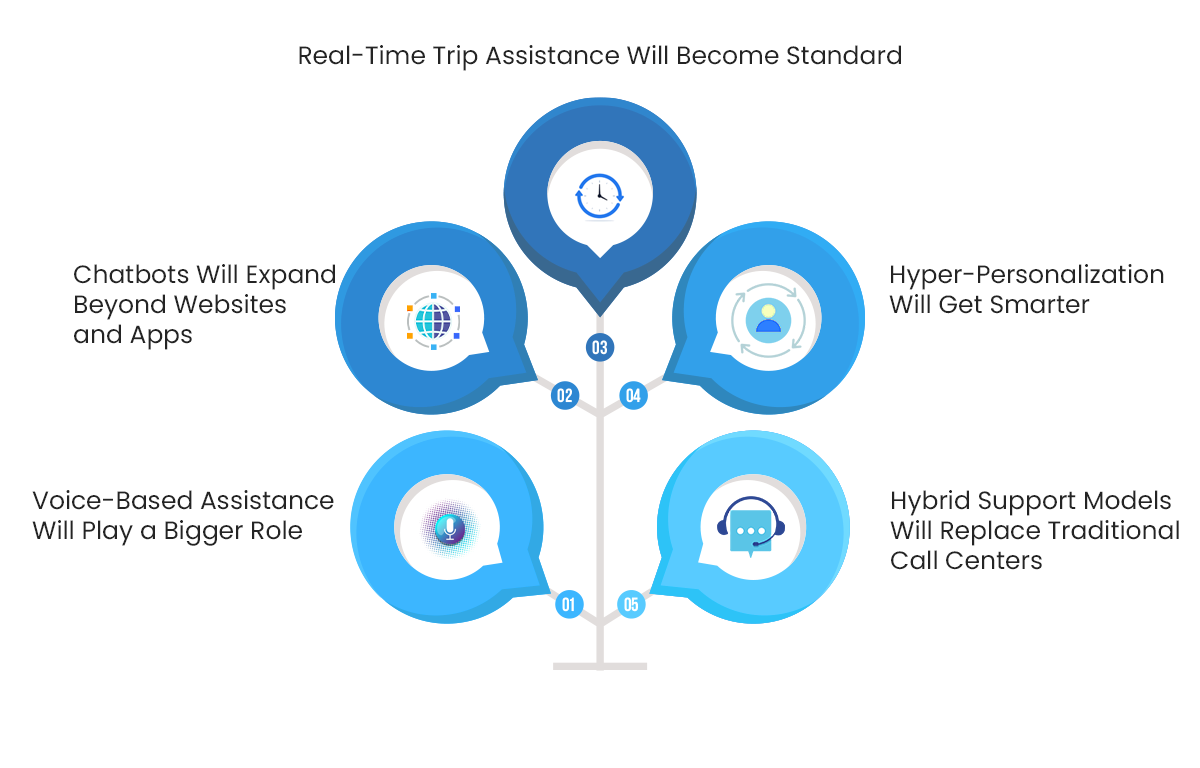
1. Voice-Based Assistance Will Play a Bigger Role
More travelers are comfortable asking questions through voice rather than typing. Voice chatbots will help users find bookings, get directions, or learn about amenities in a natural, conversational way. This trend is especially useful in mobile-first markets.
2. Chatbots Will Expand Beyond Websites and Apps
Customers now expect support through WhatsApp, Messenger, Instagram, and SMS. Travel companies will integrate chatbots across these messaging channels so customers can get help wherever they already spend their time. As travel brands expand beyond websites and apps, AI chatbots are also becoming a key pillar of WhatsApp marketing, allowing hotels, airlines, and travel agencies to answer questions, send booking updates, share offers, and provide real-time assistance directly inside the messaging app travelers already use daily.
3. Real-Time Trip Assistance Will Become Standard
AI chatbots will monitor travel conditions—weather, delays, traffic, hotel readiness—and proactively update customers. This makes the entire journey feel smoother and more predictable.
4. Hyper-Personalization Will Get Smarter
As AI models improve, chatbots will better understand customer preferences and offer recommendations that feel genuinely useful rather than generic.
5. Hybrid Support Models Will Replace Traditional Call Centers
The most efficient future system will combine AI handling 70–80% of routine work while human agents handle high-level or sensitive issues. This reduces operating costs while improving customer satisfaction.
How Zenesys Solutions Inc. Can Help You Build an Effective Chatbot
Zenesys approaches chatbot development from a practical, problem-solving viewpoint. Many travel and hospitality companies know they need automation, but they struggle with questions like:
- What features actually matter?
- How do we connect the bot with our booking engine or PMS?
- How do we handle multiple languages?
- How do we keep responses accurate over time?
- How do we reduce support workload without creating new issues?
Zenesys helps you answer these questions clearly by focusing on the operational side of your business. The team looks at your booking flow, customer patterns, support challenges, and internal systems. From there, they build a chatbot that fits your actual needs instead of pushing generic templates. This practical approach ensures: your customers get fast, clear answers your support team gets fewer repetitive tickets your booking experience becomes easier your internal systems work smoothly with the chatbot your chatbot grows with your business rather than becoming outdated Create a chatbot that reduces friction, supports your staff, and serves your customers without adding extra complexity. If you want a chatbot that aligns with how your business truly operates, Zenesys can guide you through design, development, integration, testing, and long-term improvement.



.webp?lang=en-US&ext=.webp)

.webp?lang=en-US&ext=.webp)